
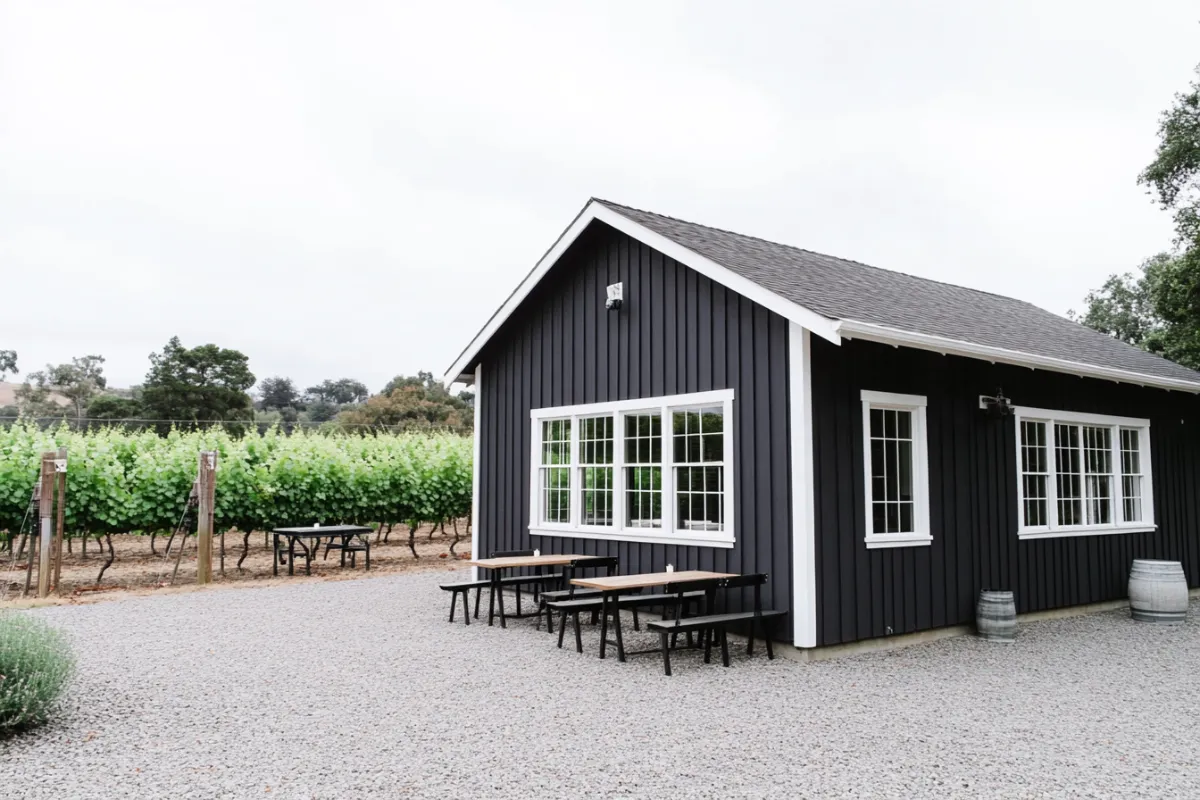
Commercial paint takes a beating that house paint never sees. Hallways get bumped by carts and chairs all day, entry doors open hundreds of times a week, and storefronts face the street in full sun. When it starts to look worn, customers notice before you do. Around the plaza in Sonoma, where tasting rooms and shops sit side by side, a faded front or a scuffed entry stands out fast. Out in Sebastopol, many of the older commercial buildings along the main roads are wood or stucco that's been repainted many times over, and the layers underneath need checking before another coat goes on.
Get a Free Estimate
Rather talk? Call (707) 940-9965
This page covers when a building is due, how we handle the surfaces you only see on commercial jobs, how we keep your doors open during the work, and how to plan repaints across a whole property. We look over the space in person and put the estimate in writing, whether it's one suite or a full complex. For owners and managers with houses too, our exterior painting crews handle residential siding and trim.
Why Commercial Paint Wears Out Sooner
It's mostly traffic. Corridors and stairwells collect scuffs, cart marks and fingerprints at hip and shoulder height, and flat paint in those spots looks dirty within a year. Door frames and corners chip. Outside, signage and awnings shade part of a storefront while the rest bakes, so the color fades unevenly and looks patchy from across the street. Restrooms see moisture and harsh cleaners every day, which wears through ordinary wall paint. Kitchens and employee break rooms are another trouble spot, with grease and splashes on the walls around the sink and microwave. Stucco on older commercial buildings cracks as the building moves, and water gets in behind it. None of that means you need a full repaint every time. Often the hallways and entries need attention years before the offices, and painting just those keeps the whole place looking cared for.
Block, Metal and Concrete: Commercial Surfaces
Commercial buildings bring surfaces most houses don't have. Concrete block walls are full of pinholes, so they get a block filler first, a thick primer that fills the pores and gives the paint an even surface. Tilt-up concrete, common in the business parks around Santa Rosa and Rohnert Park, has to be clean and fully cured, and any old coating checked for adhesion, before it's recoated. Steel doors, handrails and stair stringers rust where the paint has chipped, so the rust gets wire-brushed or ground off and the bare metal gets a rust-inhibiting primer or a direct-to-metal coating. Inside, high-traffic walls get washable enamels in eggshell or satin that can be scrubbed without wearing through, and restrooms get products rated for moisture and mildew. Wood trim and siding on older storefronts get the same scraping and priming we'd give a house. Matching the product to the surface is most of what makes a commercial job last.
How We Run the Job So You Stay Open
Before anything starts, we walk the property with one point person from your side and agree on a schedule. Work can be split into sections, so one hallway or one side of the building is closed off at a time while the rest stays open. When customers or tenants are around during the day, we save the noisiest and smelliest steps, like sanding and priming, for early mornings, evenings or weekends where that's possible. Work areas get marked off with signs and barriers, wet floors and ladders stay out of walkways, and the area is cleaned and reopened at the end of each shift. Your point person gets a quick update every day, so there are no surprises when staff arrive in the morning. If an inspection, an opening or a move-in date is fixed, we build the schedule backward from it.
Planning Repaints Across a Property
For owners with more than one building, or managers with a lot of units, repainting everything at once is rarely the most cost-effective way to do it. A better plan looks at each surface on its own timeline. South- and west-facing exteriors fade first. Lobbies and corridors need attention before private offices. Units between tenants are the easiest time to repaint inside, since they're empty and need to look fresh for showings. We can look over a property, note the condition of each building or area, and put together a written estimate that breaks the work into phases, so you can spread the cost over a year or two and handle the worst areas first. Timing helps as well: wineries and tasting rooms often prefer the slower months after harvest, when fewer visitors are coming through. We also leave you a simple record of which colors and products went where, which makes touch-ups easy years later.
Own the building and live nearby? Our interior painting crews handle homes, too.
Common Questions
Every work area gets closed off with signs and barriers, and ladders, cords and drop cloths stay out of walkways and exits. Wet paint gets marked clearly. Products with strong fumes are saved for hours when the space is empty, and we keep doors and windows open where we can. At the end of each shift, everything gets picked up and the area is safe to walk through before anyone comes back in.
Yes. Not every commercial job is a whole building. A single suite between tenants, a refreshed entry and reception area, or one storefront facade are all common requests. Small jobs often fit into an evening or a weekend, so nobody loses a workday. We give the same written estimate and the same prep and cleanup on a two-room suite as we would on a full building.
We keep it to a minimum. Most interior work uses low-VOC paints, which have much less odor than paint did a decade or two ago and clear out quickly with some airflow. The stronger products, like oil-based primers and some metal coatings, get scheduled for after hours or weekends. If someone on your team is sensitive to smells, tell us during the walkthrough and we'll plan around it.