
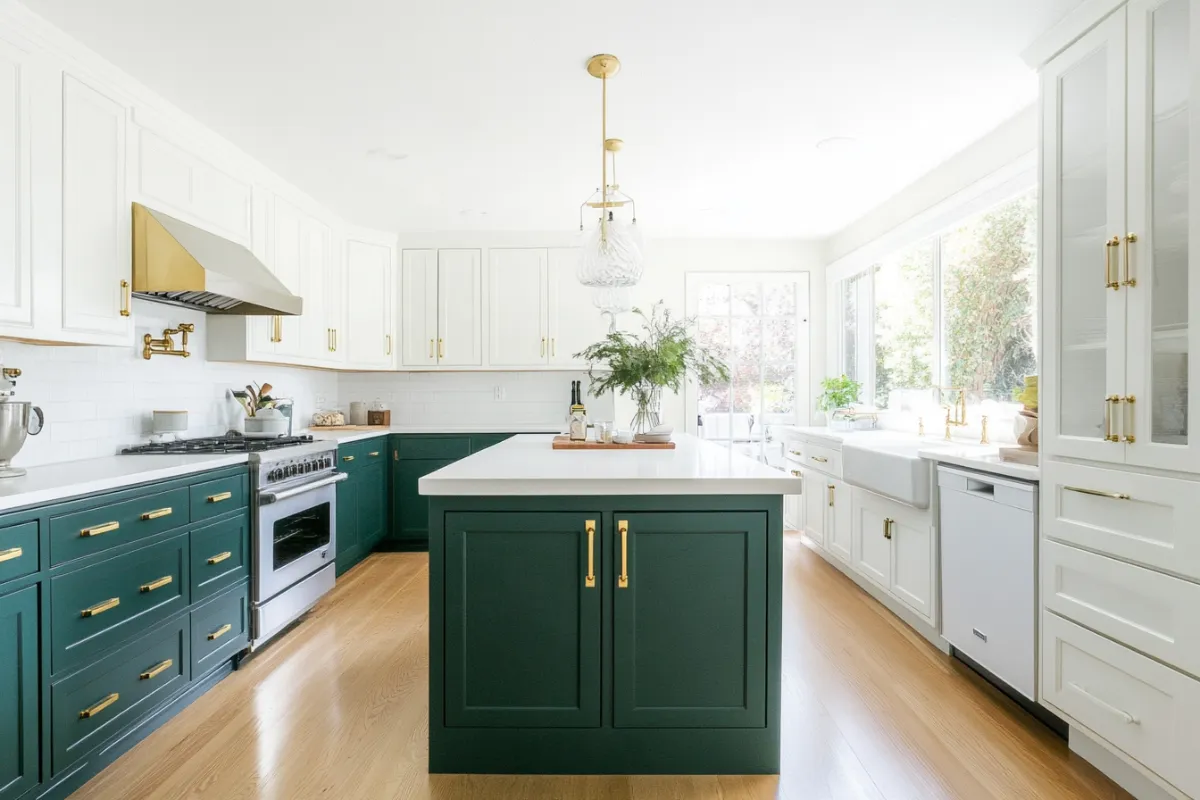
A lot of Sonoma County kitchens have good bones and tired cabinets. The boxes are solid, the layout works, and the doors still close square, but the finish is orange oak from the 1990s or white paint that's chipped around every handle. Tearing them out costs you the kitchen for weeks, and the bill often runs into five figures. Painting keeps everything that works and changes how the whole room feels. In Petaluma, we see a lot of older homes with original wood cabinets that are well built and simply dated. In Cotati, it's more often builder-grade cabinets in newer houses, where a darker or bolder color makes a plain kitchen look custom.
Get a Free Estimate
Rather talk? Call (707) 940-9965
Below: what paint can and can't fix, why cabinets need a different finish than walls, how the job runs, and what to expect while your kitchen is out of commission. Every cabinet job starts with a walkthrough, where we look at the doors, the boxes and the hardware with you. If you're painting the rest of the house too, it's easy to pair this with interior painting so the colors work together.
What Paint Can Fix, and What It Can't
Paint changes color and covers wear. It won't fix structure. Solid wood and plywood doors take paint beautifully, and so do most MDF doors. Particleboard boxes are fine as long as they're dry and firm. The weak spot is usually under the sink, where an old leak can leave the bottom panel swollen and soft, and that panel needs replacing before anything gets painted. Laminate takes paint once it has a bonding primer that grips slick surfaces. Thermofoil, the plastic wrap on a lot of cabinets installed around the turn of the century, behaves differently. Once it starts lifting along the edges, no paint will hold it down, and those doors are better replaced. Hinges that sag, drawers that stick and doors that won't line up are hardware problems. We can usually adjust them during the job, but they're worth pointing out at the walkthrough.
Why Cabinets Need a Different Finish Than Walls
Wall paint stays slightly soft and a little tacky for weeks, and nobody notices on a wall. On a cabinet door that gets opened twenty times a day, it scuffs, sticks to the frame and wears through at the edges. Cabinets need an enamel, a paint that cures hard and smooth, like the finish on a piece of furniture. Waterborne alkyd and urethane-modified enamels are the common choices now, since they level out well and don't yellow the way old oil paint did. They also take longer to cure fully than wall paint, which is why handling them gently for the first few weeks matters. Sheen counts too: satin and semi-gloss wipe clean easily, while flatter finishes hold on to fingerprints. Before any of that, the surfaces get degreased. Kitchen grease is invisible, but paint won't bond to it, and skipping that step is the most common reason painted cabinets start peeling.
How a Cabinet Job Runs
Day one, we number every door and drawer front, take off the hardware and bag it, and carry the doors out to a work area. The boxes stay in place, and the counters, floors and appliances get covered. Every surface gets degreased, sanded and wiped clean, and dings and old screw holes get filled. Then comes a bonding primer, a light sand, and two finish coats on the doors and the face frames, sprayed or brushed and rolled depending on the cabinets and the space. Doors dry and cure in our work area before they come back. When they do, every door goes back in its numbered spot, hinges get adjusted so the gaps are even, and the hardware goes back on. We finish by walking the kitchen with you, opening every drawer.
Living Without Your Kitchen for a Few Days
Cabinet jobs take several days, and most of that is drying time, not labor. Plan on the kitchen being partly out of service for that stretch. The sink and the fridge usually stay usable, but the counters will be covered and the cabinets will be empty. Before we start, clear everything out of the cabinets and drawers, and set up a small station somewhere else with a coffee maker, a microwave or a toaster oven, and paper plates. Pets do better out of the kitchen for those days, since fresh primer and curious noses don't mix. Once the doors are back on, you can use the kitchen normally, just without slamming doors or scrubbing hard for the first couple of weeks while the finish hardens. At the walkthrough we'll give you a realistic schedule based on how many doors and drawers you have, since a big kitchen and cool, damp weather both stretch the drying time.
Thinking about the outside of the house next? Our exterior house painting page explains how we handle siding and trim.
Common Questions
Yes, and it's the best time to do it. If the new pulls use the same hole spacing as the old ones, they just screw on when the doors go back up. If they don't, we fill the old holes before priming so they disappear under the paint, then drill new ones once the finish is on. Pick out your new hardware before the job starts so we can check the spacing at the walkthrough.
On red oak, it usually does, because the wood has deep, open grain. Some people like that texture. If you want a smooth, modern look, the grain gets filled with a grain filler before priming, which adds time but leaves a flat surface. Maple, birch and MDF have tight grain or none at all, so they come out smooth without that extra step. We'll show you a sample door so you can see the difference.
Laminate, yes, with a bonding primer made to grip slick surfaces. Thermofoil depends on its condition. If the plastic wrap is still tight everywhere, it can be primed and painted. If it's lifting at the edges or bubbling near the oven or dishwasher, which is common, paint won't stop it from peeling further. In that case those doors are better replaced, and we can paint the new ones to match the rest.