
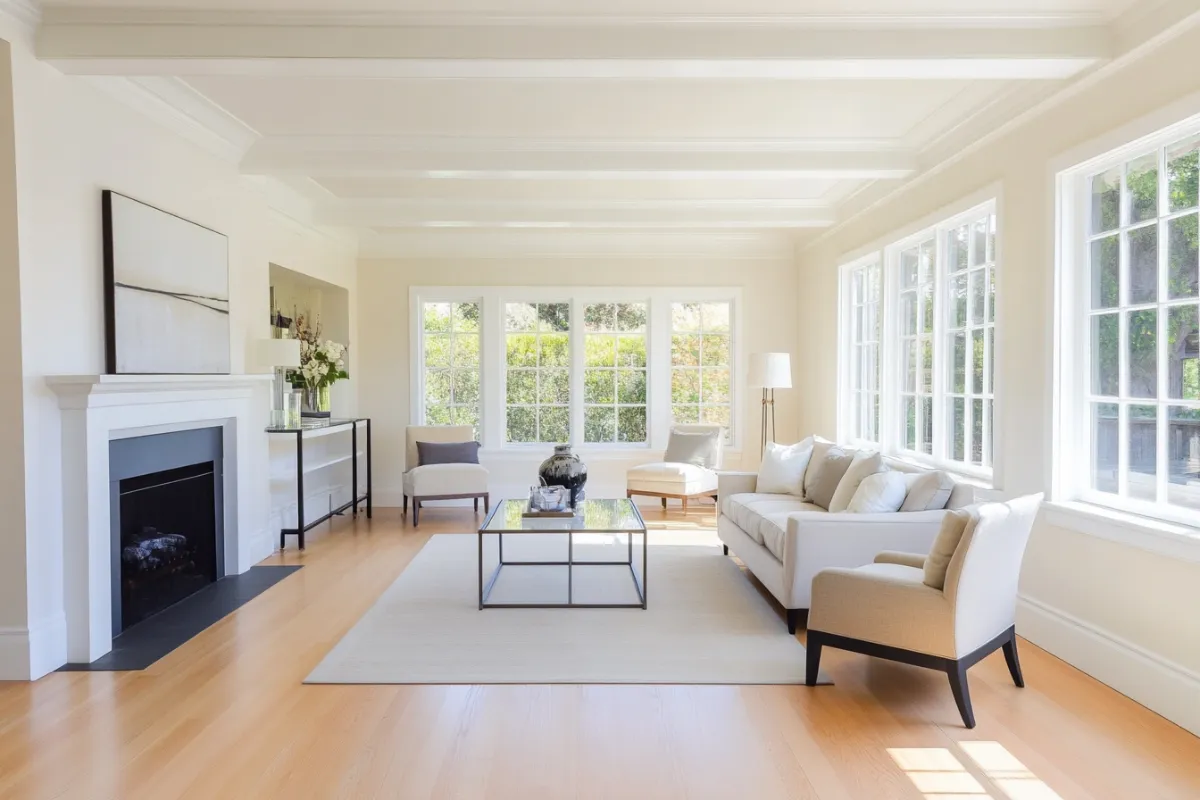
Most people decide to repaint inside for one of a few reasons. The walls have years of scuffs that don't wash off. The color made sense fifteen years ago and doesn't now. The house is going on the market. Or a water leak or a smoky fire season left stains and a smell that keep coming back. In Santa Rosa, plenty of homes still carry a trace of smoke in the drywall from past fire years, and fresh paint alone won't hide it. It takes the right primer underneath. Over in Windsor, where a lot of the houses are newer, the usual story is the original flat paint from the builder, which shows a mark every time someone brushes past it.
Get a Free Estimate
Rather talk? Call (707) 940-9965

This page walks through how to tell a room is due, the primers and paints that solve each problem, how a job runs from the first morning to the last walkthrough, and what drives the cost up or down. The schedule always keeps a kitchen and a bathroom in working order while we're there. If your kitchen cabinets need a refresh too, take a look at kitchen cabinet painting.
When a Room Is Due
Scuffs and fingerprints that don't come off with a damp cloth are the most common sign. Flat paint is especially hard to clean, and scrubbing it tends to leave shiny spots. Look for nail pops and hairline cracks along drywall seams and above door frames, which show up as houses settle. Yellowing on ceilings, especially in kitchens, usually means grease or old smoke has soaked into the finish. Brown rings mean a leak at some point, and those need sealing before any paint will cover them for good. Trim and doors take the hardest wear of all, and chipped baseboards are often what makes a room look tired even when the walls are fine. If you're selling, neutral, fresh walls are one of the simplest ways to make rooms photograph and show well. Kids' rooms and home offices that are changing purpose are another good reason, since a new color goes a long way before any furniture changes.
Primers, Stain Blockers and Low-Odor Paint
A lot of interior problems are really primer problems. Water stains, smoke residue and marker bleed straight through ordinary paint, sometimes after a few days, sometimes after a few weeks. Ceiling stains from an old roof leak are the classic example: two coats of regular paint and the ring is back by spring. The fix is a stain-blocking primer. Shellac-based primers are the strongest choice for smoke odor and heavy staining, because they seal what's in the drywall instead of covering it. Water-based stain blockers handle lighter marks with less smell. Glossy surfaces like old oil-painted trim need a bonding primer, or the new coat will peel off with a fingernail. For the finish coats, we use low-VOC paints throughout occupied homes, which keeps the paint smell down and lets bedrooms go back into use sooner. Sheen gets matched to the room, with flatter finishes on ceilings and tougher, wipeable ones in kitchens, baths and hallways.
How an Interior Job Runs
On the first morning we walk the rooms with you and confirm colors, sheen and anything that needs special care. Furniture gets moved to the middle and covered, floors get drop cloths, and outlet covers and switch plates come off. Then the prep: patching holes and cracks, sanding the patches smooth, caulking gaps along trim, and spot priming anything that needs it. We work top down, ceilings before walls and walls before trim and doors, so any drip lands on a surface that still has a coat coming. Rooms go in a sensible order so your kitchen and a bathroom stay usable. At the end, furniture goes back where it was, plates go back on, and we look over every room with you. Each evening before that, we pick up, close the cans and leave the rooms we're working in safe to walk through.
What Moves the Price
Square footage is only part of it. High or vaulted ceilings take more time and more equipment, and stairwells are slow work for the same reason. The amount of trim matters a lot, since baseboards, crown molding and window casings are all hand-brushed. Big color changes, like dark red to off-white, can take an extra coat. Empty rooms go faster than furnished ones, and a house where several rooms share one color moves quicker than one where every room changes. Wall condition is the wild card. A room with a few nail holes preps in an hour, while one with cracked plaster or peeling paint can take a day before any color goes on. Your written estimate breaks these out, so you can see where the cost comes from and decide what to include.
Planning to refresh the outside of the house as well? Read about our exterior house painting work.
Common Questions
In most homes, yes. Smoke odor lives in porous surfaces like drywall, ceiling texture and bare wood, so the walls get cleaned first, then sealed with a shellac-based primer that locks the odor in before the finish coats go on. That's different from just painting over it, which usually lets the smell come back on the first warm day. Heavy smoke damage can need professional cleaning first, and we'll tell you if we see that.
Both can take paint if the prep is done right. Paneling gets cleaned, lightly sanded and coated with a bonding primer so the paint grips the slick finish. The grooves stay unless you want them filled. Wallpaper is trickier. If it's firmly stuck we can seal it and paint over it, but if the seams are lifting, removing it first gives a better result. We'll look at it with you and recommend one or the other.
Usually the same day. Most interior paints are dry to the touch within a few hours, so a bedroom painted in the morning is often ready to sleep in that night, with windows open for some air. Furniture can go back against the walls the next day. The paint keeps hardening for a couple of weeks, so go easy on scrubbing and taping things to the walls during that time.