
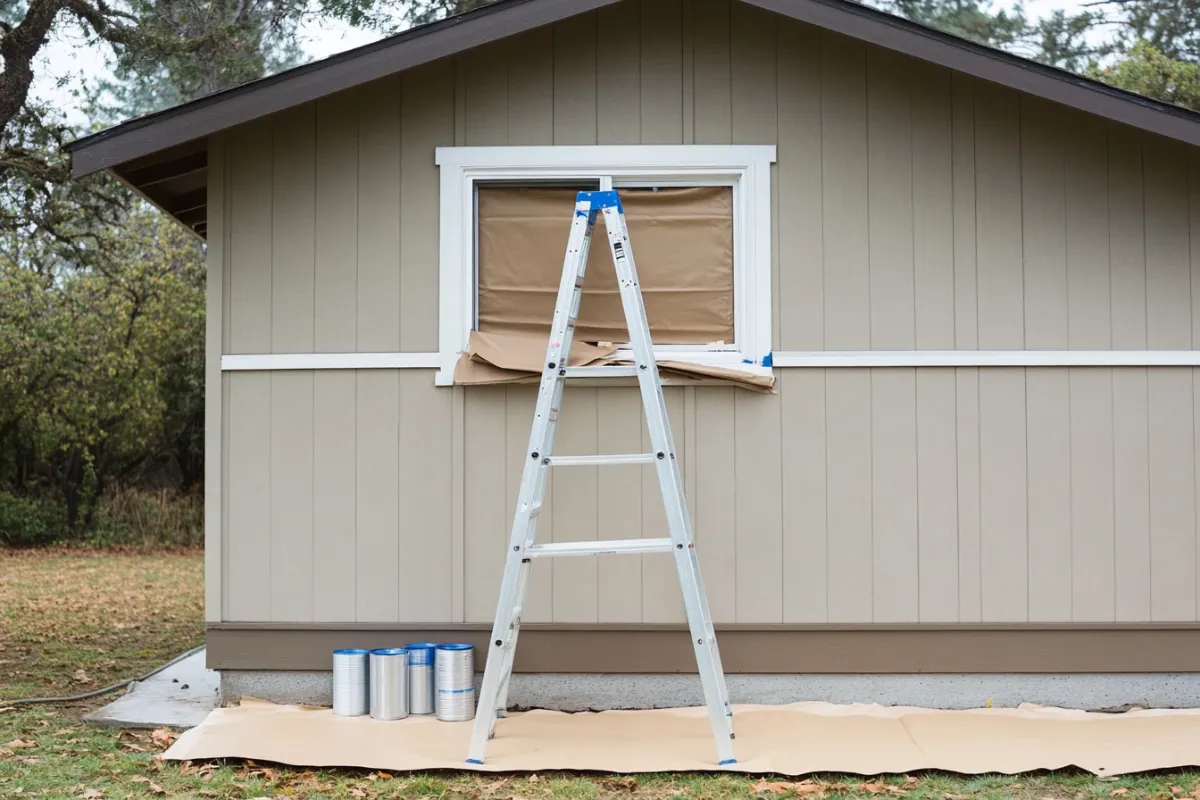
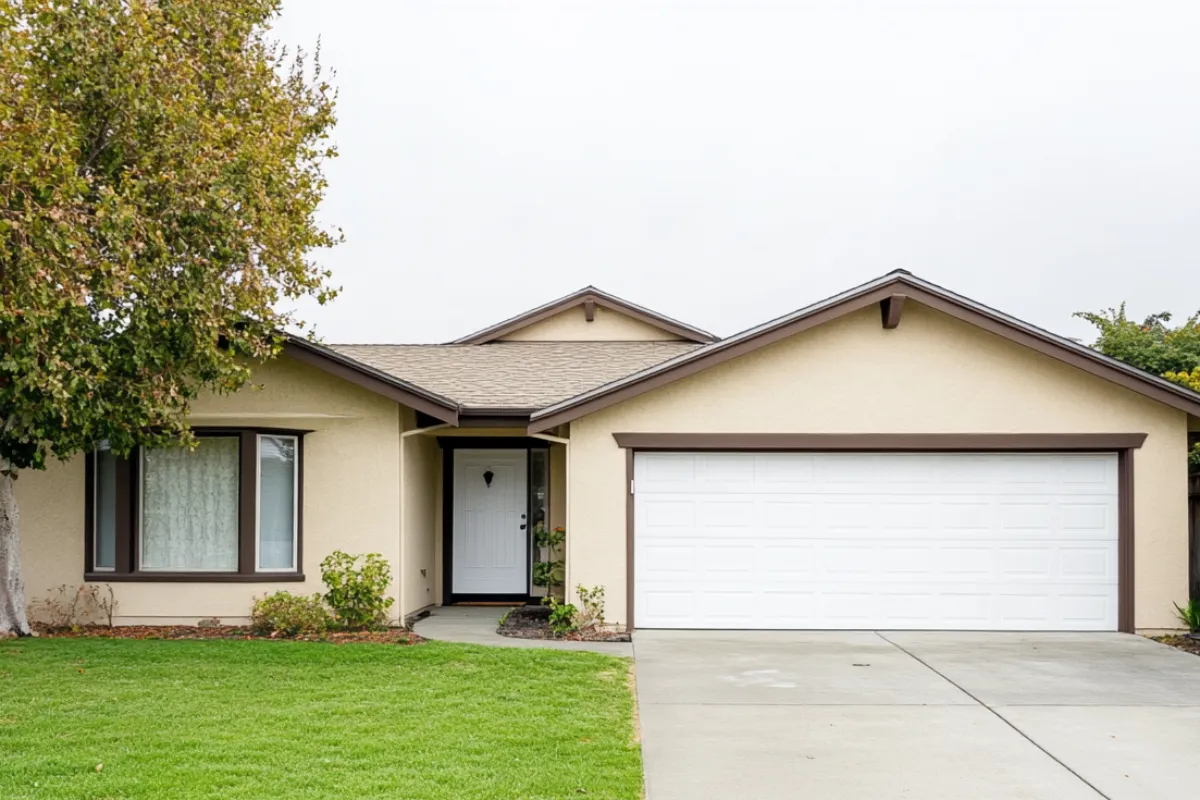
Paint on the outside of a house fails from the sunny side first. Look at the south and west walls and you'll often see it before anywhere else: a chalky film that rubs off on your hand, trim that has gone dull, and little cracks running along the bottom edge of each board. In Healdsburg, where summer afternoons stay hot for months, that can happen years ahead of the shady side of the same house. Down in Rohnert Park, the stucco tracts that went up in the 1970s and 80s show it differently, with hairline cracks and faded color that never quite washes clean. Out toward the coast, the order flips: fog keeps the north walls damp, and mildew shows up long before the sun does any damage.
Get a Free Estimate
Rather talk? Call (707) 940-9965
This page covers how to tell when your exterior is due, what wood, stucco and fiber cement each need, how our crews run the job day by day, and how we plan the work around rain, heat and fog. Small problems caught early keep the bill down, since prep is where most of the hours go. If the inside needs attention too, our interior painting crews can follow right behind.
Signs the Paint Has Given Out
Some failures are obvious, like paint peeling off in sheets. Others are easy to miss. Rub your palm across the siding on a sunny wall. If it comes away with colored powder, the binder in the paint has broken down and the surface is no longer shedding water the way it should. Check the bottom edges of the boards and the joints where trim meets siding, since that's where cracks open first. Gray, bare wood showing on window sills means water is getting in. On stucco, look for hairline cracks and dark streaks under the eaves. And on the north side of the house, green or black spots usually mean mildew, which has to be killed and washed off before any paint goes over it. Catch these early and the job is mostly cleaning and touch-up prep. Wait a few winters and it turns into wood repair.
Wood, Stucco and Fiber Cement: What Each One Needs
Sonoma County houses are covered in all three, and each takes a different approach. Redwood and cedar siding are common on older homes, and both carry natural tannins that bleed through light paint as brown stains. They need a stain-blocking primer on any bare spots before the color coats go on. Stucco is porous and has to be able to breathe, so we use masonry primers and acrylic paints made for it, and we fill cracks with a flexible patch so they don't telegraph through the new finish. Elastomeric coatings can bridge small cracks, but they're thick, and on the wrong wall they trap moisture, so we only use them where they make sense. Fiber cement siding, the kind on a lot of newer homes, usually arrives factory primed and takes a quality 100 percent acrylic topcoat well. It still needs its caulked joints checked, because that's where it lets water in.
Our Exterior Process, Start to Finish
First we wash the house to get off dirt, chalk, mildew and any ash left over from fire season, then give it time to dry completely. Next comes the scraping and sanding of every loose edge, so the new paint has something solid to grab. Open seams at window casings, door frames and corner boards get caulked, and soft or split wood gets patched or flagged for repair. Bare spots get primed. Windows, light fixtures, decks and plants get covered, and only then does color go on, usually two coats on the body and the trim. On a lot of houses, the washing and prep take as long as the painting itself, and that time is what makes the finish last. At the end we pull the masking, pick up every chip and walk the house with you, side by side, to touch up anything you point out.
Planning Around Sonoma Weather
Rain is the first thing to plan around. Most of it falls between November and April, and paint needs dry wood and stucco to bond, so the main exterior season runs from spring into fall. Heat matters too. Paint that goes on in direct afternoon sun dries too fast, which leaves lap marks and a weaker film, so on hot days in Windsor or Cloverdale we follow the shade around the house and work each wall while it's out of the sun. Morning fog near Petaluma can keep siding damp until late morning, which pushes start times back. Every can lists a minimum temperature, and we stay above it, overnight included. We watch for wind, too, since gusty days blow grit into wet paint. If an ash-heavy day hits mid-job, we stop, clean and pick back up once it settles.
If your project includes a storefront, an office or an apartment building, see how we handle commercial painting around business hours.
Common Questions
We always wash first, but not always at high pressure. Stucco and fiber cement can take a stronger rinse. Wood siding gets a gentler wash, because blasting it with a narrow nozzle can raise the grain, gouge soft boards and push water behind the siding where it sits for days. Mildew gets treated with a cleaner first and rinsed off. After washing, the house has to dry fully before any paint goes on, which is often the next day.
Yes. Trim, fascia, window frames and front doors wear out faster than the body of the house because they get more sun, more water and more handling. Painting them on their own is a smaller job that keeps the wood protected until the whole house is due. We'll match your current body color or help you pick a trim color that works with it, and the prep is the same as a full repaint.
We do, and it's easiest to include them in the same job as the house so everything gets the same color and the same prep. Older garages and barns on rural lots often have bare, weathered wood that needs extra scraping and a primer that soaks into the grain. Tell us about any outbuildings when you call so they're part of the written estimate from the start.